
This article was published amid the pandemic in our diocesan newspaper, The Courier. I was deeply moved by a talk on the same topic by Barbara Heil, a speaker and evangelist at an annual Encounter Ministries conference. The argument is mostly based on her talk, and I give her all credit. But Barbara’s message, and the message of this gospel, still resonates just as strongly today as we find ourselves navigating different storms.
How does the Gospel of Mark challenge those of us living in the midst of violent storms?
In late December, I was able to attend (virtually) the Encounter conference, the yearly conference held by Encounter Ministries. Barbara Heil of From His Heart Ministries was one of the speakers, and much of what follows comes from her talk. I give her full credit for the interpretation of Scripture I am about to share. So let’s plunge into the Gospel of Mark.
If you are reading Mark, ch. 3, you realize that Jesus is bringing the Kingdom in ways that are dramatic, transformative, controversial, and attractive…at least to many. The crowds are following him as he heals people of illnesses, including casting out evil spirits. He is calling the Twelve to preach and drive out demons, and he is accused by people who should know better of having unclean spirits or having lost his mind. None of this was status quo rabbinic behavior. This was the “Kingdom of God breaking into the world through the Son of God” behavior.
Then you move into Mark, ch. 4, and Jesus begins to teach the ways of evangelization through parables. Some would understand what they were hearing, and some would not.
Starting at Mark 4:35, Jesus says, “Let’s go to the other side [of the lake, or sea].” As Barbara said, Jesus knew there were people on the other side waiting for their visitation. The disciples may not have realized this, but those people were waiting. They were in need, and they were waiting for the Son of God. Jesus knew this when he told the disciples to get into the boats.
He also knew there would be a storm. And he went to sleep as the disciples pointed the boat to the other side.
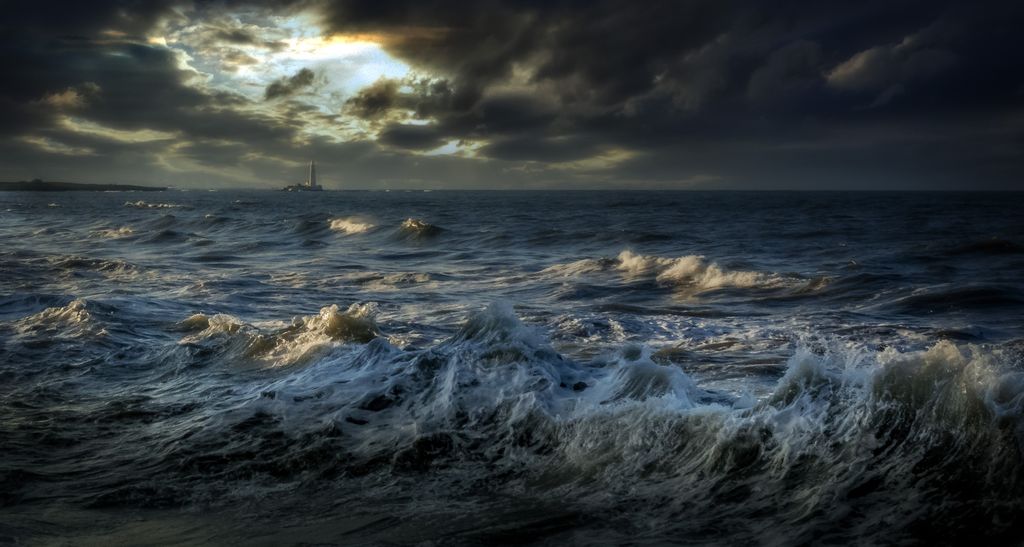
Mid-journey, the storm came. The disciples were frightened and alarmed. The water was about to swamp the boat and they were afraid that they were going to die. And so they shook Jesus awake, and shouted at him over the storm–“Don’t you care if we drown?”
Jesus woke up, looked at the storm, and said “Quiet, be still.” Creation heard the voice of the One present at the creation and murmured, “It is him!” And creation became calm. And Jesus turned to the disciples in that calm and quietly said–where is your faith?
So: what is your storm? There have been plenty of storms lately, and the storms are real. They are frightening. They can harm and injure. Is it our political landscape? Threats to your life? The shaky economy? Your job market disappearing in AI ether? Your inability to make ends of meet? Is it your parish? Your workplace? Your children? Your marriage? Your mental health? Most of the above?
Jesus Christ knows our storms. And he is right there.
But Jesus Christ called you, through your baptism, to share the good news. And you were called with the divine foreknowledge that these would be the circumstances. The call still stands. The call was made for the storm. The call is greater than the storm.
There are people still waiting for us. They are on the other side of the storm. Jesus calls us to them. How tempting it is to say, “But Jesus, I know you called me to do this, I know you want me to do this, but look–there’s a great big storm! I can’t! Because look at it! Don’t you care if I die?”
Which brings us to the second question, Jesus’ question: where is your faith?
Personally, I don’t hear that question as a harsh question. I hear it as a pointed question, a curing question, a medicinal question. But it is incisive, like a scalpel.
So what if your life doesn’t look like how you expected? Your vocation doesn’t look like what you expected? Your family doesn’t look like what you expected? Your parish doesn’t look like what you expected? Your town doesn’t look like what you expected? Your nation doesn’t look like what you expected…?
The call of Jesus Christ to stay in the boat and get to the other side remains. Stay in the boat. There are people awaiting their visitation. They need God. He asked you to bring himself to them. Keep going.
And what did they encounter when they got to the other side? They encountered a man known as the Gerasene demoniac. This is one of the most powerful stories in Mark (much beloved in our apostolate!), and I encourage you to read it again: 5:1–20. There was a man possessed by a spirit of self-destruction. “Night and day among the tombs and in the hills he would cry out and cut himself with stones….” He was possessed by many evil spirits, which they named as “Legion, for we are many.”
Is there a people intent on self-destruction in our own day and age? Night and day among the tombs and in the hills he would cry out and cut himself with stones… Does that sound like people we know, living among the spiritually dead, crying out, destroying themselves? I’m not saying that we have multiple spiritually possessed generations, but the reality we are living in should give everyone pause. Our youngest generation is the unhappiest generation on record, and this is statistically backed up. The move onto social media has had some positives, but also an incredible number of negatives, including an increase in depression, anxiety, and dehumanization of the other.
They, we, need a visitation from the Lord.
They, we, are called to carry an encounter with the transformative goodness and power of God to these people, our brothers and sisters.
They need God. We need to stay in the boat and get to them. If we allow the storm to thwart God’s plan for us to carry the word to them, they continue to spiritually destroy themselves.
The good news in this…and there’s so much good news!…is that Jesus is with us! He has the power to calm the storm (we can ask!) or, he will be with us as we get us to the other side. He has the power to transform people’s lives for the better, to bring good out of evil. He has the desire to draw all people to himself, the Prince of Peace. The storms are not the last word. He has conquered its aim: death.
But we have a choice to make. Will we stand by Jesus in the storm? Will we trust him? Will we keep our eye on what he has called us to do–to bring his powerful peace and love to people in desperate need?