

Welcome back to our occasional feature at The Mark 5:19 Project, 15 Minutes on Sharing the Gospel: short interviews on sharing the gospel with people who have something to say on the subject. Some of these people may be well-known and leaders in the emerging field, and others practicing “the long faithfulness” in a a much quieter, less known manner. Shoot, some people may be interviews on the street. We’re going to have fun with this, so we can all learn together.
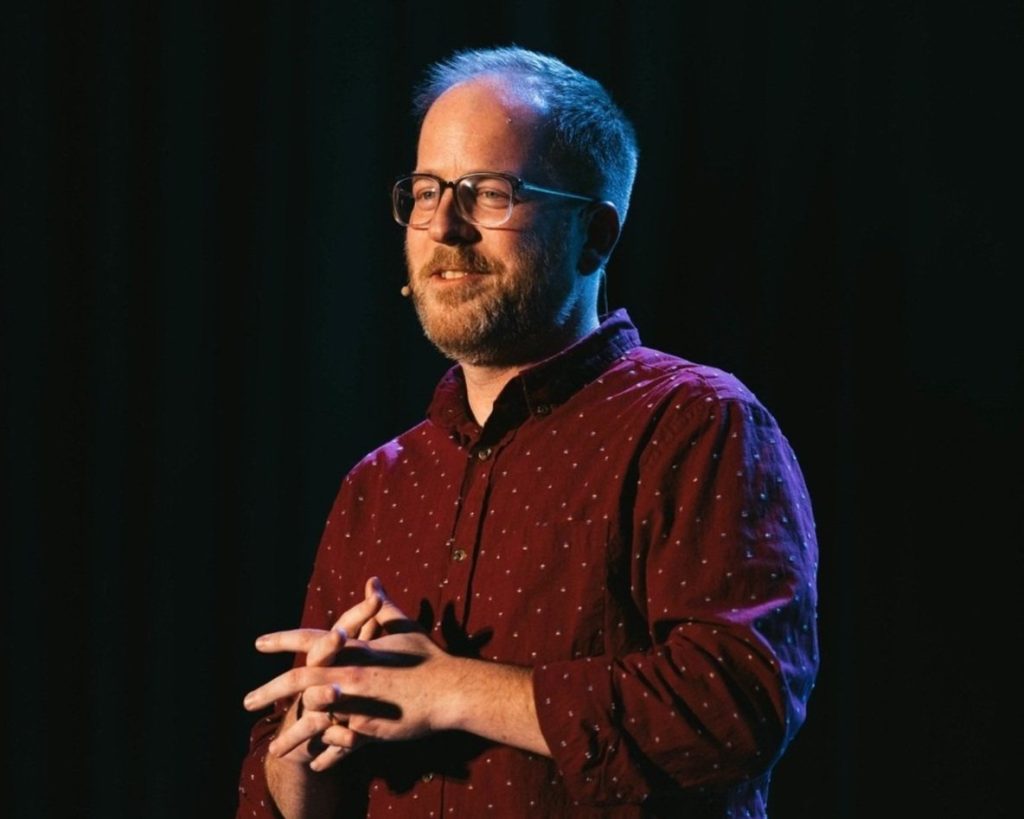
This month’s interview is with Ryan O’Hara, a host of the Better Preach podcast as well as a Catholic speaker and parish mission leader. For many years he served evangelizing college students through Saint Paul Outreach leadership, as well as serving as an expert on evangelization in the Revive Parishes web series, FOCUS’ SEEK conference, and more. I’m grateful because he has been a great encouragement to me in this new apostolate, and he focuses on a piece of the evangelization puzzle in a way many have not: the genuine art and need to communicate the gospel as an invitation that requires an answer.
Let’s get to it! These interviews are recorded and then transcribed, and lightly edited for clarity and length.
Susan Windley-Daoust: Hi Ryan, how are you doing today?
Ryan O’Hara: Doing great. Great to be here.
SWD: We’re going to plunge right into our 15 minutes, and I’m going to begin by asking you a question that I think is near and dear to your heart–and that is why you even chose to focus on the art of giving talks and preaching and communicating. There are so many things that are involved in evangelization. Communicating the gospel message is a very specific kind of niche thing, even though it’s critical. So why don’t you unpack that a little bit for us…why did you choose this?
Ryan: I’d say two reasons kind of come to the fore–a personal reason and then a pastoral reason. I’ll start with the pastoral piece. We know in in Romans 10 it says that faith comes through hearing. And I think in many ways, say what you will about where the Church is today, there is a broad lack of personal, abiding faith in Jesus: the kind of faith that follows Jesus wherever he wants them to go and transforms their lives. And that kind of faith is often awakened through hearing, through preaching.
The personal reason is that’s how it happened for me. In college, I heard the gospel proclaimed. I was a Catholic who left the church in kind of a kind of a quiet leaving. I didn’t really mean to, I just stopped going to mass. I had other things to do on Sunday, I guess–probably just sleep in.
I was going to a Baptist college, and so there were these kind of evangelistic retreats. They would invite me to Bible studies but I didn’t really know what that was…but they invited me as a Catholic to a retreat, I’m like oh! I get retreats! So I went on this retreat…and really heard the gospel. And it was like that tinder of faith that had been given to me at baptism and supported through the sacramental life–that tinder of faith needed a spark, and the spark was hearing the gospel.
And so I came home from that weekend, and my life was different. I began praying and joined a men’s group and went back to the sacraments. As they say the rest is history, but it was hearing the gospel proclaimed personally that changed my life.
And then, as I got into that relationship with Jesus I was discerning my call: what am I going to do with my life? I heard a call to ministry in with college students, and that was what I ended up going into at the University of Missouri Newman Center, and there are all sorts of opportunities to repeat that process of gathering people to hear and see the gospel proclaimed.
I just had a love and an affinity for doing that myself, and teaching and equipping others to share the gospel. And that’s really been my life’s work with college students over the last 25 years. And there’s always been this “teaching preaching” component. I was always somebody who would have loved to have been a part of these bigger conferences or be invited into that, and that’s just never where the Lord had me.
And I wanted to learn. I wanted to learn from those people who are on those stages who were these really powerful voices for the gospel, and I wondered what we could do to get a podcast to learn from them….We can watch talks, but I want to know what goes into preparing those talks and kind of go behind the scenes and that was the genesis behind the format of the Better Preach podcast.
That’s how the Lord has, I think, used me in many and varied ways over the years to help awaken faith in others’ lives, particularly in Catholic settings. So both personal and pastoral reasons drew me into this particular topic.
SWD: That’s really interesting. It’s interesting to me that you first were renewed in your Christian commitment in going on a retreat at a Baptist college. The first place I was actually asked to speak on my faith was in a Baptist Student Union, even though I was Catholic. I went with my friends, and it was just the place where sharing the gospel was normative and where they actually gave a platform to do so, they gave me a “stage.”
It’s interesting because on one hand, I think your podcast fills such a need for learning. And on the other hand, there is also such a need for more platforms, for more opportunities for people to share their story, right? Communication is so obviously important to evangelization. I was going to ask next how we are falling short, but I may have stolen your answer…maybe we’re not giving each other the opportunity to share the gospel. How do you think we are falling short in communicating the gospel?
Ryan: I have this image that we’re in the middle of a rebuild. And that the Church is moving–we hear the phrase a lot, you know–from maintenance to mission. But this truly is what’s happening.
We’re in the midst of a culture shift in the Church and in the world. And I think it’s just going to take time. You mentioned that Evangelical Protestant world, the Baptist Student Union there. Well, they speak the gospel message fluently. It’s just part of their language, their identity, their culture. It’s so natural and easy. It just flows.
For us as Catholics, we’ve been deeply impacted by the kerygma and many of us who have had that experience of a kind of transformation through hearing the word of God preached and then responding to its promises. But we’re helping to rebuild a world in the Church where the kerygma is native, where we are all fluent. I was thinking about this question and I thought, you know, I still after all these years have to stop and think what is the kerygma and have to do these little kind of mental gymnastics.
And then we have formulas that help. There’s nothing wrong with the formulas, but we still have to rely on these formulas, whatever they might be: the core gospel message in four parts or, The Rescue Project has their own…. In SPO [Saint Paul Outreach], we would talk about it as Love, Sin, Son, Lord. Well, I can tell you the core gospel message because I can remember those four words. But I’m doing it as like I’m still rehearsing, it’s memorized.
I think we’re going to get to a place in the future where it’s more native and it flows naturally and our language catches up with this pastoral initiative that must take place in the Church.
Now that said, 30 years ago, I know we weren’t speaking it as a Church–but we are now. And 30 years from today, how much more so? I just think it’s going to take time, but we’re falling short because we can’t give away what we don’t have. And we’re just beginning to have it, if you will.
SWD: Right. Yeah, that’s a fascinating way to think about it. I was thinking it’s like the difference between memorizing the Pythagorean theorem and actually knowing how it works and just, you know, working out the problem by having the facility in advanced math. And I was the person who was always memorizing the Pythagorean theorem because I was horrible at advanced math. And it got me somewhere; it got me a C in Pre-Calc. But, memorization is not what our discipleship calls for. It calls for us to really live in the word of God. It was given to us as this precious reality and gift. And I agree, we often struggle with the kerygma, or the first proclamation. I almost hate that we call it the kerygma, even though that’s correct. But it’s the original Greek and for most people they hear: oh, great. Another language. I don’t have any idea what that even refers to.
Ryan: Yeah, that’s right.
SWD: Answering “Who is Jesus to you? And why does he matter?” Well, he saved me and he sent his Holy Spirit to help all of us live and bring this good news–this salvation to every human being on earth. There it is, that’s the proclamation. But I had to sit and think through every word I was saying right there.
Ryan: It’s tough. It’s tough for many and it shouldn’t be this tough.
SWD: True. I’m glad for the ride that we’re on and I’m glad for your work in it. I’m really appreciative of anybody who makes it easier to talk about how good God is.
Ryan: Right, it ought to be the most natural tongue that we have. And that and that will ultimately require, you know, a deep kind of lifelong discipleship.
And I think we’ll see the years and the decades of disciples being disciples will continue to bear fruit. And, you know, the wisdom that will come from the evangelists that we heard 20 years ago to the deeper wisdom that we’ll hear from that same person.
And so as we listen and invest in discipleship, both personally and as a church, in terms of our mission, I think we’ll just continue to see–hopefully, prayerfully–a compounding fruit.
SWD: We only have a couple more minutes. So I’m going to go ahead and throw the big question in at the end.
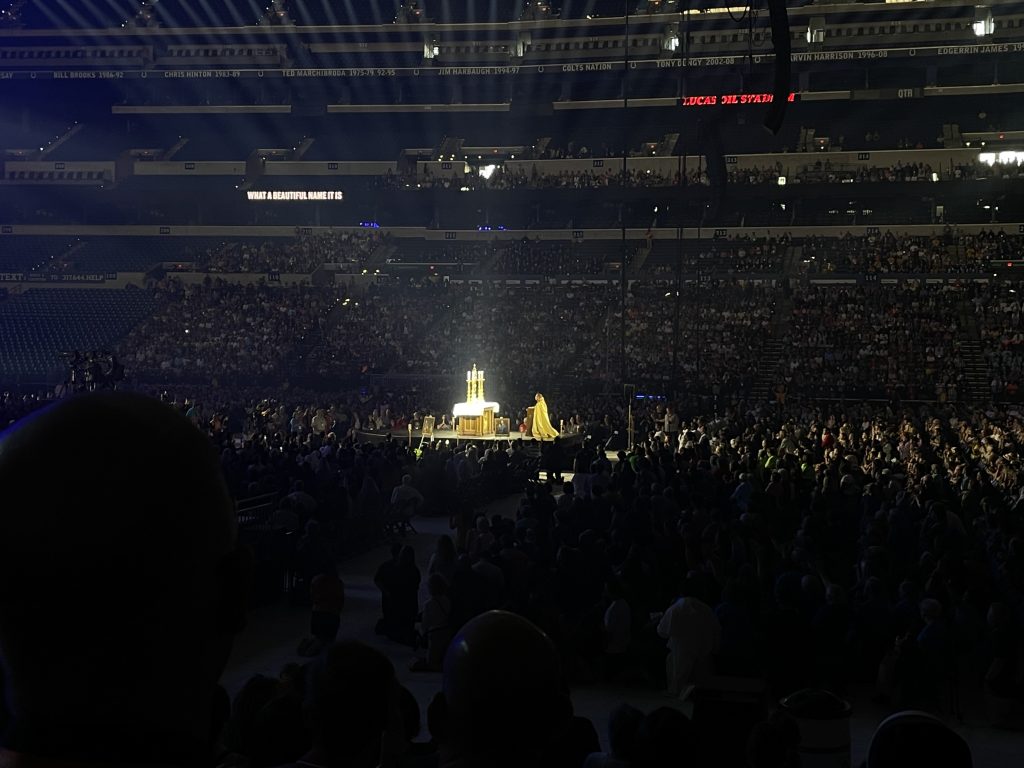
Do you see the Eucharistic Congress maybe as being one of those pivotal moments that is helping us live fully in the Word and being people who bear the Word to others? I know you were there and I was not. So I’m really interested.
Ryan: I believe so. I believe so. And it didn’t have to be that way. I would answer affirmatively to the impact that I think the Congress can have on the Church going forward because of the nature of the Congress itself.
And the fact that Jesus was the center, more than anything else, more than anyone else, more than any one speaker, leader, message, experience, Jesus himself in his real presence in the Blessed Sacrament, in the church’s liturgies that we celebrated and in our worship of the Lord exposed in the Blessed Sacrament. I think we’ll look back on those days together as the launching of something, the fanning of a flame of something big.
And I think we’ve still yet to see what the ultimate fruit of that will be. I feel like we’re probably in the early days as people came back from World Youth Day in Denver in ‘93 and didn’t know how to process what they experienced there and Pope John Paul saying, “Be not afraid.” And, you know, and that was a church changing moment–or at least a significant waypoint.
And I see, I see if nothing else, this Congress will be a waypoint in the Church’s history in America, and an important one. But I think we’re going to see even greater things to come, if you will, because…it sounds so silly, but Jesus stole the show! He was the main actor in the whole thing. And it was such a profound experience.
And I did not anticipate that. I thought they’re going to make attempts at adoration, but boy, that’d be hard. There’s 60,000 of us.
What are we going to do? Be 60,000 people silent for 15 minutes? Well, yeah, that’s what happened. And, wow. And that was just the beginning of it.
So I hope so. I pray so. The Church needed that moment because there’s just been so much to be frustrated about and hurt about, and that’s all real.
But we also needed a moment where the Lord would speak tenderly to his people and draw us close to him. And that’s what he did.
SWD: Well, I’m really grateful that you were there and able to speak to it today.
I think I also want to close this by saying all the grace that was released in the Eucharistic Congress, I have to believe it was not just for the people at that Congress that actually is ushering in really a new graced period in our history of the Church of the United States. So, like you say, in some ways a waypoint, but I really do believe it myself and I was not there. I was just watching it online, but I was just so moved through a screen, which I didn’t think could happen. Something truly different is happening here. And one that is ultimately for the profound good of Catholicism, and I would dare say even all Christians in the United States.
Ryan: Yes. But we don’t know what that is yet. And that’s the exciting part.
SWD: So Come, Holy Spirit, right?
Ryan: Right.
SWD: Ryan, thank you so much. I really appreciate your time and your work.
You can learn more about Ryan’s apostolate work at www.ryanohara.org .